
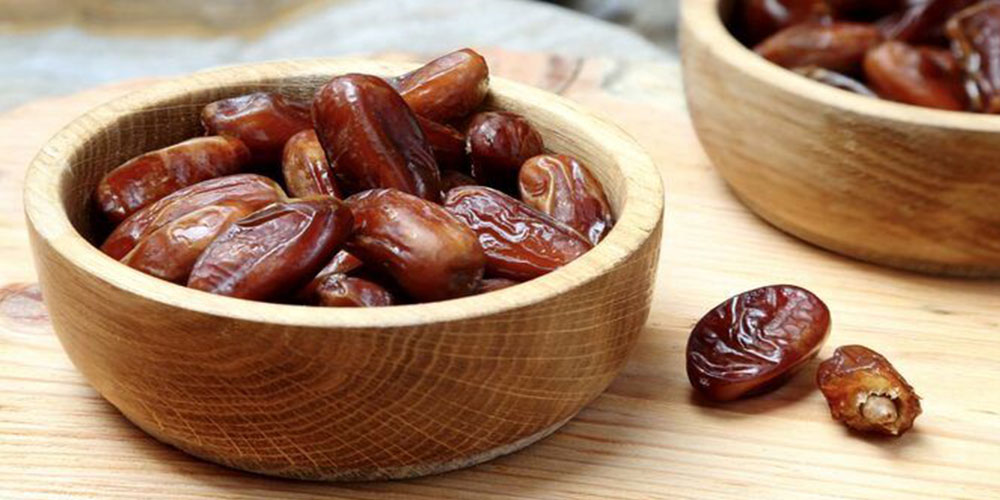
Buying dates by the carton online is a different job from picking up a 1kg box at the pasar. You commit to 5kg or more of one variety and grade, you cannot squeeze the fruit before paying, and the box has to survive the trip and then your kitchen or shop. Done well, it keeps a household or a small business supplied without constant top-ups. Done carelessly, you end up with a carton of soft kurma segar turning sour in a hot storeroom.
This guide covers what bulk packs actually look like, what they cost right now, which dates handle bulk storage and which do not, and what to check on a listing before you pay.

What "borong" means on a date listing
On one Malaysian wholesaler's current list, bulk comes in two formats. The first is a loose carton, mostly 5kg of a single variety and grade. The second is a carton of smaller retail packs: twelve 400g packs, twelve 500g packs, twenty-four 200g pouches and so on.
The loose carton is usually the better deal. On that list, Mariami AA costs RM129 for a loose 5kg carton and RM153 for twelve 400g pouches (out of stock when checked), which is less fruit for more money. The pouches save you the work of weighing and sealing, which matters if you are reselling at a kenduri stall or putting together door gifts.
Grades are part of the listing too. A, AA, AAA, Jumbo and VIP appear across the catalogue. These are each importer's own size sorting, not an international standard, so an "AA" from one seller is not guaranteed to match another seller's "AA".
Bulk prices, checked November 2026
The table below shows bulk cartons from one Malaysian wholesaler, checked in November 2026. Per-kilo figures are worked out from the carton price.
| Carton (as listed) | Price | Per kg | Stock when checked |
|---|---|---|---|
| Mariami A Normal 2026, 5kg | RM75 | RM15 | In stock |
| Safawi Premium A No.2 (Mini) 2026, 5kg | RM80 | RM16 | In stock |
| Ajwa Premium A No.1 (Small) 2026, 5kg | RM115 | RM23 | In stock |
| Ajwa Premium VIP AAA, 5kg | RM175 | RM35 | In stock |
| Medjool Palestin Premium Jumbo 2026, 5kg | RM280 | RM56 | In stock |
| Medjool Palestin Jumbo 2026, 12 × 500g | RM355 | about RM59 | In stock |
| Rotab Sukkary Premium, 3kg | RM63 | RM21 | In stock |
| Deglet Noor Bertangkai, 12 × 400g (semi-dry) | RM88 | - | In stock |
| Rotab Mazafati AAA, 12 × 600g | RM86 | - | Out of stock |
Look at the gap between the two Ajwa rows. Same variety, same carton weight, and the VIP AAA costs RM60 more. That difference is grade, which is size sorting. If you are buying Ajwa to eat at home, the smaller grade is the same variety in a smaller size.
Watch the price labels too. Every one of these listings showed a sale price next to a higher regular price. The Ajwa VIP AAA carton, for example, was listed at RM175 against a regular RM450. The sale price is what you pay at checkout, so compare sellers on that figure, not on the crossed-out one.
Which dates suit a bulk order
Not every date wants to sit in a carton for months. The FAO date palm handbook splits whole dates into the stages they are sold at: khalal, rutab and tamar. Dates at every stage except tamar are perishable because of their high water content. Tamar dates have lost most of their water, and FAO calls that stage the best condition for storage.
The two rotab cartons in the table are the perishable ones. For the rest, the variety and origin are worth knowing before you commit to 5kg of one:
- Ajwa comes from Madinah. It is small, roundish and near-black, with finely wrinkled skin, and it is soft.
- Safawi comes from the Madinah region too. It is longer than Ajwa, dark brown to black, soft and chewy.
- Mariami is Iranian, dark, semi-dry and chewy.
- Medjool originated in Morocco, and the cartons in the table are from Palestine. It is large and very soft, with a rich caramel taste.
- Deglet Noor, sold on the stem as kurma tangkai, is from Tunisia or Algeria. It is golden, translucent and semi-dry.
For background on two of these, this site has pieces on Medjool from Palestine and on why kurma tangkai is treated as a premium date.

Kurma segar in bulk needs a cold plan
Rotab, the soft fresh-ripe stage, is the kind of kurma segar where bulk buying gets risky. Rutab dates turn sour quickly unless they are cold stored, according to FAO. Mazafati, the dark Bam date sold as rotab, needs refrigeration. It is cold-stored by the trade and sold all year, so there is no need to stock up out of fear that it will disappear. The Mazafati carton in the table was simply out of stock on the day it was checked.
A 12 × 600g carton of rotab is 7.2kg of fruit that has to fit in a fridge. Before ordering, measure the space. If it will not fit, split the carton with family or another trader on the day it arrives rather than leaving packs on the counter.
Also ask the seller how chilled stock is sent. A courier van in the afternoon heat is not cold storage. If the answer is vague, buy fresh rotab in smaller amounts, or collect it yourself.
Storing a bulk carton once it arrives
FAO's handbook gives storage figures from research in Tunisia. Wetter dates kept at 0°C lasted 6 to 8 months. Drier dates could be kept for more than a year, and the driest could be kept at 25°C for up to a year. High sugar together with high moisture made spoilage worse.
The same chapter says the temperature commonly used for long-term preservation of several varieties, including Medjool, is −18°C, which also cuts down sugar crystallisation and skin separation. So a 5kg Medjool carton can go into the freezer in smaller bags, and you take out a week's worth at a time.
Whatever the variety, keep the carton sealed, off the floor and out of the sun. Repack into airtight tubs once it is open.
Getting through 5kg of dates
Five kilos is a lot of snacking, so it helps to have uses beyond the fruit bowl. Chopped dates go into cakes, cookies and bread. They also go into salads, and they can be stuffed with cheese or nuts for a quick appetiser. Blended with banana, yoghurt and milk, they make a smoothie. Taste it before adding any sugar.

Homemade spreads and chutney are the other big outlet. FAO lists date paste as a filling for cakes, date syrup (dibs) as a sweetener for various foods, and sauces for steak or chutney in which the dates provide sugar and form the body of the sauce. A carton of a value grade, such as the Mariami A or Safawi Mini above, is the sensible choice for this kind of cooking. Save the large grades for eating whole.
Among the in-stock 5kg cartons in the table, Mariami A Normal has the lowest per-kilo price. There is more about the variety in this note on kurma Mariami.
Before you click "buy"
Is the carton in stock?
Several bulk listings were out of stock on the day these prices were checked, including the Mazafati rotab carton. Read the stock line, not just the price.
Is the weight per carton or per pack?
"12 × 500g" is 6kg in total, while "500g" alone is a single pack. Do the multiplication before comparing prices between sellers.
Does the grade matter for my use?
For cooking and blending, usually not. Grades are size sorting, and once the dates are chopped into a cake, size no longer shows.
Do I need a fridge for this order?
For soft kurma segar such as Mazafati rotab, yes. FAO says tamar-stage dates protected from insects can be kept without special precautions, so dry cartons can sit in a cool cupboard, with the freezer saved for long holds.
More about this site is on the About page and the contact page.